















About
PricingContact
Hackerrank-logo
airbnb-logo
Darwinbox-logo
Gitlab-logo
Tripadvisor-logo
Airbase-logo
Architect-labs-logo
Threatmodeler-logo
Rattle-logo
Hackerrank-logo
airbnb-logo
Darwinbox-logo
Gitlab-logo
Tripadvisor-logo
Airbase-logo
Architect-labs-logo
Threatmodeler-logo
Rattle-logo

Recently Added Product Managers in our Network

Lakshya Khandelwal

Lakshya KhandelwalProfile Badge IC

Senior Business Analyst5 Years of Exp
  • Microsoft Power Platform
  • Product Management
  • SQL
  • Advance Excel
  • View all (8)

Good exposure to each phase of Software Development Life Cycle (SDLC), development of projects from stage of concept to full development.Hands-on experience in FICO Blaze Advisor, SQL, JIRA and Power BI.Experience in Banking Domain.Detail-oriented Project Coordinator & Order Processing Specialist with 5+ years of experience in order management, process tracking, vendorcoordination, and project execution. Proficient in NetSuite, Microsoft Office Suite (Excel, Word, Outlook), and Power BI, ensuring seamless orderprocessing, accurate invoicing, and efficient workflow automation. Adept at collaborating with cross-functional teams, including sales, operations,recruiting, and marketing, to streamline customer order tracking, vendor management, and logistics coordination. Recognized for ensuring highaccuracy in order execution, maintaining well-organized project documentation, and enhancing operational efficiency.

Tarun Bansal

Tarun BansalProfile Badge IC

Principal Product Manager11 Years of Exp
  • UI/UX
  • User Research
  • Product Management
  • GTM
  • Development
  • View all (7)

Passionate about solving user problems by developing customer-centric experiences that help build long-term relationships.

Navdeep Singh Panwar

Navdeep Singh PanwarProfile Badge IC

Senior UX/UI Designer4 Years of Exp
  • Prototyping
  • Usability Testing
  • User Research
  • Wireframing
  • View all (7)

Hi! I'm Navdeep, a passionate Creative Visual Artist with a passion for crafting immersive digital experiences that captivate audiences across diverse industries. Over the past 5 years, my journey in the design realm has been a canvas for innovation, collaborative excellence, and a testament to driving impactful change through design thinking.I have thrived in collaborative environments, working closely with visionary teams, and channeling my expertise to catalyze forward-thinking designs. My knack for blending creativity with functionality became evident through projects that breathed life into engaging digital experiences.

Atul Paliwal

Atul PaliwalProfile Badge IC

Product Manager11 Years of Exp
  • CCaas
  • cloud telephony
  • Problem Solving
  • Technical troubleshooting
  • View all (7)

Driven by innovation and armed with over 9 years of hands-on experience in product management, I am Atul Paliwala seasoned Product Manager dedicated to crafting cutting-edge mobile and web applications that redefine industry standards. My journey in product management has been marked by a relentless pursuit of excellence, guided by strategic planning, agile methodologies, and a deep commitment to user-centric design.

Mrudula Kavuri

Mrudula KavuriProfile Badge IC

Product Manager3.6 Years of Exp
  • Scrum
  • User stories
  • UX Design
  • product backlog
  • Analytics
  • View all (8)

Product Manager, passionate about improving customer experiences

Swati Kumari

Swati KumariProfile Badge IC

Product Manager8.7 Years of Exp

Results-driven Product Manager with expertise in software development and a strong commitment to user-centric productinnovations. Proficient in overseeing all aspects of the product lifecycle, I excel at turning initial concepts into impactful productsaligned with user needs. Proven track record in significantly boosting user engagement, improving customer experiences, anddriving growth in both B2B and B2C markets, contributing to increased customer satisfaction and business success.

Ellipse 1Ellipse 2Ellipse 3Ellipse 4Ellipse 5Ellipse 6

India's largest network of 3.5M+ professionals

Check out some of the candidates who recently joined.

Search

Hire Product Managers in 4 Easy Steps

01
DefineDefine ic

Tell us what you need

You define the role, we match immediately.

02
DiscoverDiscover ic

Meet the top talent

Get 3 to 5 highly relevant candidates in 48 hours.

03
EvaluateEvaluate ic

Interview with ease

Choose the candidate that aligns with your needs and we'll arrange an interview.

04
OnboardOnboard ic

Hire with confidence

Once you decide, we'll take care of the onboarding process for you.

Top Reasons to Choose Uplers

Hire in 48 Hours

Hire in 48 Hours

Receive the top 3-5 AI-interviewed profiles from our network within 2 days.

Top 1% Talents

Top 1% Talents

Only the best profiles vetted using AI and human intelligence make it to your inbox.

Start-up ready Matching

Start-up ready Matching

Engineers who wear multiple hats, move fast, and don't need hand-holding.

Works in 5+ Time Zones

Works in 5+ Time Zones

Engineers overlap with EST/PST: 4–6 hours daily and flexible to preferred time zones.

Employer on Record (EOR)

Employer on Record (EOR)

We handle all legal and payroll complexity of hiring from India, so you don't have to.

Simple Contracts

Simple Contracts

Straightforward agreement with top-most flexibility and freedom.

30 Days Cancellation

30 Days Cancellation

Cancel without any obligations in cases of dissatisfaction, financial instability, or business slowdown.

2X Retention Rate

2X Retention Rate

92% of placed engineers still with clients after 12 months

Various Skills that Product Managers Possess

Access the talent network of 3.5M+ professionals with 100+ skill sets

profile collage
Begin your hiring journey with us!
Hire a top talent

What Founders & Engineering Leaders Say About Us

Testimonial thumbnail
Play video

Uplers earned our trust by listening to our problems and finding the perfect talent for our organization.

Barış Ağaçdan
Director
Testimonial thumbnail
Play video

Uplers helped to source and bring out the top talent in India, any kind of high-level role requirement in terms of skills is always sourced based on the job description we share. The profiles of highly vetted experts were received within a couple of days. It has been credible in terms of scaling our team out of India.

Aneesh Dhawan
Founder
Testimonial thumbnail
Play video

Uplers efficient, quick process and targeted approach helped us find the right talents quickly. The professionals they provided were not only skilled but also a great fit for our team.

Melanie Kesterton
Head of Client Service
Testimonial thumbnail
Play video

Uplers' talents consistently deliver high-quality work along with unmatched reliability, work ethic, and dedication to the job.

Linda Farr
Chief of Staff

Case Studies of Tech Companies

Check Our Latest Blogs

Hire Product Managers to Transform Ideas into Market-Ready Solutions

We all love a new idea! However, just having a good idea is like owning a fancy sports car without knowing how to drive it. Product managers assist businesses in transforming such "Eureka" moments into desirable end products that potential customers are prepared to pay for.

81% of businesses with over 2,500 workers have a product management team. This highlights that product management is crucial. If you are a product or Startup company, you will always want to transform innovative ideas into market-ready solutions to stay competitive.

However, you might not have the expertise to achieve this in-house. Moreover, if you are looking to expand product management into a department to focus on core business aspects, you must hire product managers for startups who understand scaling challenges.
Product Compass

Image Source

To hire product managers, you need to first understand their values, roles, skillsets, and how they can transform your business ideas into marketable solutions. Let's dive in.

Understanding the Role of a Product Manager

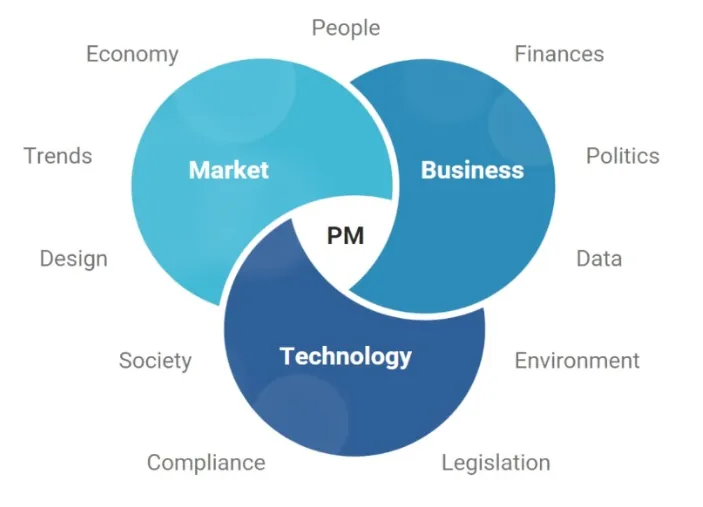
A product manager incorporates business, design, and technology to build a valuable, practical, and usable product. Key roles include:

  • Outlining a defined product strategy in terms of demand, target audience, and competitor analysis.

  • Strategically creating a product roadmap for sales, development, and marketing teams on product features and milestones to be met.

  • Utilizing market demand, competitors, and consumer insights for effective positioning to craft an engaging story appealing to the buyer.

  • Using customer feedback to develop better products catering to the market needs.

In contrast to project managers, who concentrate on timelines and deliverables, or product owners, who prioritize certain features, product managers care about a larger view of the overall product strategy.

The Value of Hiring a Product Manager

Before you hire lead product managers, you must be fully aware of the potential value they can add to your business. Let's find out.

New list icon

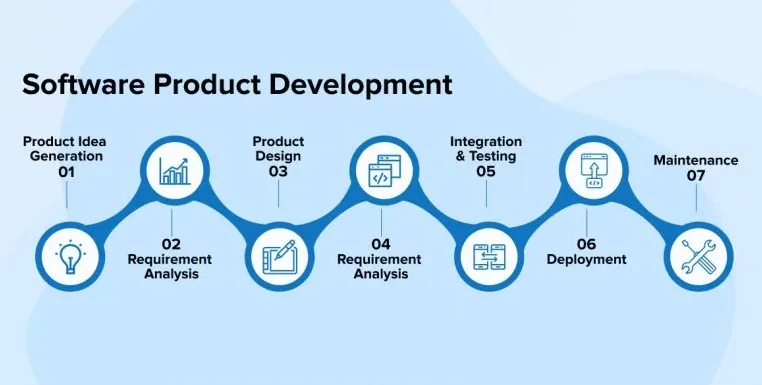
Simplifying Product Development Processes
Software Product Development

Image Source

Product managers use frameworks that allow for team collaboration and reduce lost time due to miscommunication or mismatched goals.

New list icon

Strategic Vision

They assign a strategic vision to the products they oversee. They recognize the competitive environment and customize your company's products for the market.

  • Improving Cross-Functional Team Collaboration

    They bridge the gap between various departments, ensuring that all teams work toward the same goal.

  • Acting as the Customer's Voice

    They identify consumer needs, collect feedback, and conduct user research to keep the product relevant and offer solutions to the users' pain points.

  • Faster Time-to-market and Revenue Generation

    According to studies, an effective product manager may raise revenues by 34.2% for the company, largely because of faster decision-making and streamlined procedures.

  • Data-Driven Decisions

    Product managers leverage data to analyze user behavior and evaluate performance, enabling data-driven product decisions for continuous improvement. This leads to better product optimization, aligned with customer expectations.

    Now, you must ensure that the product manager you hire has a certain skill set that makes him/her capable of adding that desired value. We'll discuss that next.

Understanding the product manager skills for startups ensures you hire someone who can deliver results from day one.

New list icon

Key Skills and Qualities to Look for in a Product Manager

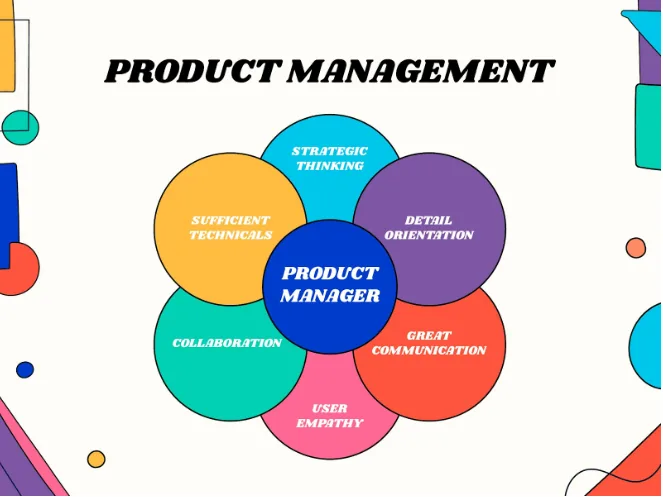
When you hire product managers, do not include every possible skill in the job description. Instead, consider these essential skills to ensure a good hire:
Product Management
  • Market analysis and customer-centric thinking: They must be able to assess market trends and have a customer-first, empathetic mindset while addressing issues and improving the user experience.

  • Strong communication skills: They must explain the product vision in strategic and tactical terms to peers and executives.

  • Cross-functional understanding: They must possess quantitative skills like data analysis and also understand business, design, and technical concepts.

  • Domain knowledge: Workable knowledge of particular industries or certain Startup products is a good-to-have add-on, especially when you hire API product managers for technical products.

  • Prioritization skills: They should be capable of making decisions and setting priorities despite data and resource limitations.

New list icon

How Product Managers Transform Ideas into Market-Ready Solutions

Curious about how product managers help startups bring innovative concepts to life?

In general, product managers plan and execute the following steps to transform business ideas into desirable products:

  • Establishing the product vision: The development process is guided by a well-defined vision, which the product managers communicate with stakeholders.

  • Finding opportunities through market research: To identify market gaps, they collect information via surveys, interviews, and competition analysis.

  • Supervising product design and development: They collaborate with engineering teams to guarantee that products are constructed in compliance with regulations and quality standards.

  • Organizing go-to-market and product launch strategies: Product managers create comprehensive plans that incorporate sales training and marketing initiatives.

Whether you're seeking remote product managers for hire or looking to transform business ideas into products, the right product leader can define your growth trajectory.

New list icon

Conclusion

To summarize, an organization's success is greatly impacted by its product manager's capacity to improve teamwork, expedite procedures, match products with consumer wants, and boost its time-to-market and revenue potential.

However, selecting the right candidate who can help you with all of the above is difficult. This is where Uplers, one of the largest AI-driven hiring platforms, helps Startup companies like yours to hire product managers.

Why Forward Deployed Product Managers Are Becoming Essential for AI-Driven Businesses

Most AI companies struggle because product decisions break somewhere between what customers actually need and what engineering teams end up building. And nobody owns this gap. It has become one of the biggest challenges for AI-driven businesses in 2026.

The demo looks impressive, investors are excited, engineering ships fast, and sales promise big. Yet, six months later, a perfectly capable AI product quietly dies in a pilot.

Customers say, “Looks powerful, but it doesn’t really fit how our team works.”

You have probably seen this happen and felt that tension.

Over 80% of AI projects failed to deliver their intended business value, and RAND Corporation’s analysis of 2,400+ enterprise initiatives found the failure was rarely about the technology. It was about execution, adoption, and the missing layer between product and reality.

That missing layer is now known as a Forward Deployed Product Manager (FDPM). Startups that hire Forward Deployed Product Managers are finding faster AI ROI, shorter feedback loops, and significantly stronger customer retention.

Let’s understand why this role is fast becoming non-negotiable.

New list icon

Who Is a Forward Deployed Product Manager?

A Forward Deployed Product Manager works at the customer’s side, inside their workflows, their ops rhythms, and their daily reality, while staying connected to the engineering and product teams back home.

Traditional PMs mostly optimize what gets built. They are responsible for defining roadmaps, prioritizing features, and aligning internal stakeholders. On the other hand, Forward Deployed Product Managers focus on whether what gets built actually works in the real world. They solve real implementation problems as they happen and ensure the product works in the customer’s environment.

One operates closer to the roadmap, the other closer to the customer’s day-to-day reality.

It’s not a customer success role nor a solutions engineer role. It sits somewhere between strategic PM and operational problem-solver. It is embedded where the product actually meets the ground. They are product managers who spend less time theorizing user problems and more time observing them firsthand.

Unlike a conventional PM who manages a roadmap from a centralized function, an FDPM:

  • Stays close to the customer’s day-to-day operations.
  • Translate messy, context-heavy business problems into precise product requirements.
  • Is accountable for whether the product works in the wild.

Instead of asking, “What feature should we build next?”, they ask, “What is actually stopping this customer from getting value?”

New list icon

Why AI Startups Need a Forward Deployed Product Manager

Traditional software was deterministic. If input X comes in, output Y goes out.

But AI products are probabilistic. It means even when the technology works, outcomes can still vary depending on context, workflows, or user behavior.

In practice, this creates a common startup problem. For example, “The model worked perfectly in the demo, but customers never adopted it.”

A conventional roadmap-focused PM focuses on sprints, stakeholder alignment, and feature sequencing. FDPMs ensure continuous calibration in ambiguous territory, which is important for AI deployment.

What users say they want and what improves their workflow are often two different things. Forward Deployed Product Managers help bridge that gap.

New list icon

Why AI-Driven Businesses Are Hiring FDPMs

Let’s see why startups need forward deployed product managers:

They Close the Gap Between Customers and Engineering

Customers explain business pain in operational language.

A customer says, “We need faster decisions.”

A traditional PM hears a better dashboard and a cleaner UI.

A Forward Deployed Product Manager digs deeper. They investigate, sit with the ops team, and realize the real issue is delayed model inference slowing operational approvals.

Same customer complaint. Completely different solution.

That translation loss, from customer need to engineering action, is where most AI product value gets destroyed.

FDPMs sit between customers, product teams, AI engineers, and founders. They eliminate information degrading as it moves between people.

They Help AI Products Survive Real-World Complexity

AI products rarely work perfectly once deployed. Real customer environments are messy, data quality changes, workflows evolve and edge cases are suddenly critical to the business.

This is where FDPMs become valuable. Instead of treating deployment like a finish line, they treat it as a learning phase. They navigate this complexity, identify where the product is breaking, understand the specific context and create the feedback loop.

Because in AI, shipping the product is usually just the beginning.

They Accelerate Product-Market Fit

For startups, speed matters. But building fast without customer clarity can become expensive very quickly.

FDPMs reduce feedback cycles by gathering customer insights faster, validating assumptions early, prioritizing features, and finding workflow issues. The results in less engineering waste, faster iteration, and a product that fits the market.

New list icon

What Does a Forward Deployed Product Manager Do?

The role sounds strategic, but most of the work is highly practical.

Customer Discovery in Live Environments

FDPMs don’t rely on interviews or surveys but observe how users work. They understand where they get stuck, what they skip, and what they’ve hacked together with spreadsheets because your product doesn’t quite cover it.

Translate Business Problems Into Product Requirements

FDPMs turn vague business operational pains into clear product priorities.

For example, they don’t say, “We are losing time in approvals.”

But suggest improvements: “Reduce model response latency during workflow bottlenecks.”

This requires both business fluency and technical literacy, in the same person, at the same time.

Cross-Functional Coordination

FDPMs work closely with AI engineers, data scientists, product designers, and customer success teams. Their job is to keep everyone aligned around customer outcomes.

Iterating During Deployment

Post-launch isn’t the finish line. FDPMs track adoption patterns, spot friction points early, and drive continuous improvement. They refine workflows using real adoption signals, customer feedback, and operational insights.

New list icon

When Should Companies Hire Forward Deployed Product Managers?

Not every startup needs a Forward Deployed Product Manager immediately. But there are clear signals.

Customer Needs Keep Changing

If your roadmap shifts every quarter based on what customers are telling you in implementation calls, you need an FDPM sitting closer to those conversations.

AI Adoption Is Lower Than Expected

People sign up but never fully integrate the product into their daily workflows. They’re either using it occasionally or not at all. This is rarely a UX problem. It’s almost always a workflow fit and change management problem. That’s FDPM territory.

Engineering Teams Are Building Without Customer Context

Another indication is strong technical execution but weak business outcomes. If your team is shipping features but the ones that land don’t move the needle for customers, you need an FDPM.

Enterprise Deployments Are Getting More Complex

This role becomes especially valuable for B2B SaaS, AI agents, workflow automation platforms, and enterprise AI infrastructure.

S&P Global found that 42% of companies scrapped at least one AI initiative in 2025, up from 17% the year before. The abandonment rate in enterprise is accelerating. Companies with FDPMs embedded in deployments are far better positioned to catch failure signals early, before a contract renewal conversation.

New list icon

Skills to Look for When You Hire Forward Deployed Product Managers

The strongest FDPMs are usually hybrid operators. Look for people with:

Customer empathy at depth: Genuine curiosity about how people work.

Technical fluency with AI systems: They must understand how probabilistic outputs create real-world user friction.

Product thinking + operational mindset: Simultaneously strategic and ground-level.

Comfort with ambiguity: The job is often defining the problem, not solving a pre-defined one.

Fast decision-making in high-context environments: Where information is incomplete and moving quickly.

The best FDPMs naturally move between customers, systems, and execution. They tend to come from implementation, solutions, or early-stage startup backgrounds.

New list icon

Conclusion

AI products are becoming harder to build in isolation. The companies winning in AI are usually the ones closest to customer reality.

A Forward Deployed Product Manager is a critical role because they help startups bridge the gap between technical capability and actual adoption.

Sometimes, the missing piece is not better AI. It is a better translation between the product and the people using it.

If you’re looking to hire Forward Deployed Product Managers for your AI team or want to understand whether this is the right next hire, get in touch with us.

Frequently Asked Questions

Uplers ensures a seamless hiring experience by combining AI and human intelligence to vet top-quality Product managers. You receive carefully shortlisted profiles within 48 hours and can onboard the right talent in as little as 2 weeks, helping you hire faster without compromising on quality.

You can receive the top 1% shortlisted profiles within 48 hours through Uplers. Once you finalize the most suitable Product Manager, Uplers handles the entire hiring and onboarding process. Depending on your requirements and decision-making timeline, onboarding typically takes 2-4 weeks.

The modes of communication through which you can get in touch with a hired Product Manager include:

  • Email
  • Phone
  • Messaging apps such as WhatsApp, Slack, or Microsoft Teams

If the manager doesn’t meet your expectations, we offer a 90-day replacement guarantee for full-time hires and a lifetime replacement for contract roles, at no additional cost. Additionally, you can opt for a 30-day cancellation policy with no extra charges, giving you complete flexibility to make changes as needed.

The average cost of hiring a Product Manager from Uplers starts at $2500. The number varies depending on the experience level of the manager as well as your requirements.

View Our Pricing For 2025 - 26

At Uplers, candidates are thoroughly evaluated for communication skills and overall suitability for collaboration. Beyond language proficiency, cultural alignment is also assessed to help ensure seamless integration with your team, fostering effective communication, collaboration, and long-term success.

Uplers connects you with Growth Product Managers, Technical or Platform Product Managers, and Generalist Product Managers for startups and scaling businesses. They bring expertise in product discovery, roadmap planning, backlog prioritization, stakeholder management, analytics, and product delivery across B2B, B2C, and SaaS environments. For the best hiring outcomes, your brief should clearly define the product type, business stage, technical complexity, and success metrics for the role, helping identify Product Managers whose experience aligns with your product and growth objectives.

Look for Product Managers who can clearly communicate product vision, roadmap priorities, and data-driven decisions to executives, engineers, designers, and business stakeholders. Strong PMs should be able to explain prioritization trade-offs, handle stakeholder feedback constructively, present product metrics in terms of business impact, and align cross-functional teams around shared goals to drive successful product outcomes.

A company typically benefits from hiring a Product Manager once product decisions become too complex for founders or engineering leaders to manage alongside their existing responsibilities. Unlike a founder, who sets the company vision, or an engineer, who focuses on technical implementation, a Product Manager owns product strategy, prioritizes customer needs, aligns cross-functional teams, and ensures development efforts deliver measurable business outcomes. Unlike a project manager, who focuses on timelines and execution, a Product Manager defines what should be built, why it matters, and how it supports the company's goals.

Yes. Many Product Managers in our network use prioritization frameworks such as RICE, ICE, MoSCoW, and Opportunity Scoring to evaluate initiatives based on business value, customer impact, confidence, and implementation effort. They build outcome-driven roadmaps, prioritize backlogs around strategic objectives, balance stakeholder requests with product goals, and align engineering, design, and business teams through clear communication and data-driven decision-making. Their focus is on delivering the highest-impact work while maintaining transparency throughout the product planning process.

Experienced Product Managers use OKRs, product analytics, funnel analysis, and A/B testing to prioritize initiatives and measure business impact. They define success metrics, identify user drop-off points across the customer journey, validate product hypotheses through controlled experiments, and track key indicators such as activation, engagement, retention, and conversion. Using tools like Amplitude, Mixpanel, Segment, and SQL, they turn customer and product data into actionable insights that guide roadmap decisions and continuous product improvement.

Yes. Product Managers in our network align stakeholders by creating a shared understanding of product goals, priorities, and success metrics across engineering, design, marketing, sales, and customer success teams. They use Product Requirements Documents (PRDs), roadmap reviews, backlog refinement, sprint planning, and regular stakeholder updates to communicate priorities, resolve trade-offs, and keep teams focused on delivering high-impact outcomes. By combining clear communication with data-driven decision-making, they build consensus and help cross-functional teams execute efficiently throughout the product lifecycle.

Yes. Many Product Managers in our network conduct product discovery before development to validate customer problems, identify opportunities, and reduce the risk of building low-value features. They use techniques such as user interviews, Jobs-to-Be-Done (JTBD), usability testing, customer surveys, and competitive analysis to gather insights and validate assumptions. Throughout development, they continue collecting user feedback, refining requirements, and measuring product outcomes to ensure roadmap decisions remain aligned with customer needs and business objectives.

Look for Product Managers who consistently make data-driven prioritization decisions, balance customer needs, business goals, and technical constraints, and focus on measurable outcomes rather than simply delivering features. Strong PMs should demonstrate experience in roadmap planning, stakeholder management, product discovery, experimentation, and using metrics to validate decisions. They should also be able to navigate competing priorities, communicate trade-offs effectively, and align cross-functional teams to deliver products that create lasting business value.