
















About
PricingContact
Hackerrank-logo
airbnb-logo
Darwinbox-logo
Gitlab-logo
Tripadvisor-logo
Airbase-logo
Architect-labs-logo
Threatmodeler-logo
Rattle-logo
Hackerrank-logo
airbnb-logo
Darwinbox-logo
Gitlab-logo
Tripadvisor-logo
Airbase-logo
Architect-labs-logo
Threatmodeler-logo
Rattle-logo

Recently Added Java Developers in our Network

Aishwarya Nagare

Aishwarya NagareProfile Badge IC

Backend Java Developer3.8 Years of Exp

I am a Backend Java Developer with 3 years of experience in building and maintaining scalable, secure, and high-performance applications in the banking and enterprise domains.💻 Core Expertise: Java 8, Spring Boot, Hibernate, Microservices, RESTful APIs, and MySQL.🚀 Skilled in backend logic, API integration, and database optimization to improve performance and reliability.✅ Strong in writing clean, maintainable, and efficient code, backed by unit testing and best practices.🤝 Experienced in Agile/Scrum environments, collaborating with cross-functional teams to deliver robust and customer-focused solutions.

Samir Saurabh

Samir SaurabhProfile Badge IC

LJA16.2 Years of Exp
  • Kotlin (jvm)
  • React Native
  • Spring Boot
  • AWS
  • Java
  • Elasticsearch
  • View all (10)

An experienced Associate Architect with a passion for multi-tenant platforms, providing solutions to business problems. Extensive hands-on experience with great passion in Defining, Designing, and Implementing highly scalable, available, flexible solutions. Managed multiple technical programs and projects, and developed winning proposals. Have extensive experience interacting with corporate clients and company executives.

Taufiq Ahmed

Taufiq AhmedProfile Badge IC

Java Developer13.8 Years of Exp

I’m a passionate Software Architect with over a decade of experience designing and delivering scalable web applications using Java, Spring MVC, Spring Boot, and cloud technologies. My expertise spans lending and education domains, where I’ve built innovative solutions that drive efficiency and impact. At Lentra AI, I architected a low-code/no-code platform that processes 6M+ third-party requests monthly, serving 10+ clients with 99.9% uptime and reducing onboarding time by 60%. I’ve led teams to develop 4 applications and 9 microservices, optimized databases like MongoDB and PostgreSQL for 25% faster query performance, and mentored 10+ developers to enhance team productivity. Previously, at Lrnr Global Infotech, I developed educational platforms using Groovy and Grails, supporting 10K+ users and improving student engagement by 15%. My work includes implementing RESTful APIs, CI/CD pipelines with Jenkins, and zero-downtime AWS EC2 deployments. I thrive in solving complex problems, leveraging Agile methodologies, and building systems that scale. Proficient in AWS (EKS, EC2, S3, Lambda), Docker, Kafka, and TDD, I’m driven to create solutions that deliver value. Let’s connect to discuss how I can contribute to your next big project!

AJITHSHYLIN

AJITHSHYLINProfile Badge IC

Java Developer5 Years of Exp
  • Java
  • AWS
  • PHP
  • Python
  • MySQL
  • Core Java
  • Micro services
  • Rest APIs
  • View all (11)

Java Developer with 3+ years of experience in Spring Boot, REST APIs, and microservices. Proven expertise in optimizing performance and security in scalable applications. Strong background in Elasticsearch, authentication systems, and payment gateway integration. Demonstrated success in driving 30%+ improvements in response times and user experience.

Sukumar Munusamy

Sukumar MunusamyProfile Badge IC

Java Developer5.7 Years of Exp
  • Algorithms
  • Bootstrap
  • Data Structures
  • Design patterns
  • Docker
  • Java
  • View all (10)

Self-taught Java Developer with expertise in Java EE (J2EE JSP, Servlets) & Spring Boot. Currently enhancing skills through a boot camp. Successfully developed and implemented several projects using microservices architecture with Spring Cloud. Strong problem-solving abilities and a passion for learning new technologies. Seeking opportunities to contribute technical expertise in a dynamic environment.

Manish Yadav

Manish YadavProfile Badge IC

Lead Java Developer11.2 Years of Exp

8+ years of experience as Java developer. Involved in all phases of Software Development using Agile Methodology. Having good experience in Build and Automation process Highly motivated, self- driven and result oriented professional with good analytical, communication and interpersonal skills An experienced team player with excellent problem solving and leadership skills. Also skilled in data collection, analysis and management. Able to work under pressure and consistently meets deadlines and targets while delivering high quality work.

What are you looking to hire?

Hire Java Developers in 4 Easy Steps

01
DefineDefine ic

Tell us what you need

You define the role, we match immediately.

02
DiscoverDiscover ic

Meet the top talent

Get 3 to 5 highly relevant candidates in 48 hours.

03
EvaluateEvaluate ic

Interview with ease

Choose the candidate that aligns with your needs and we'll arrange an interview.

04
OnboardOnboard ic

Hire with confidence

Once you decide, we'll take care of the onboarding process for you.

Top Reasons to Choose Uplers

Hire in 48 Hours

Hire in 48 Hours

Receive the top 3-5 AI-interviewed profiles from our network within 2 days.

Top 1% Talents

Top 1% Talents

Only the best profiles vetted using AI and human intelligence make it to your inbox.

Start-up ready Matching

Start-up ready Matching

Engineers who wear multiple hats, move fast, and don't need hand-holding.

Works in 5+ Time Zones

Works in 5+ Time Zones

Engineers overlap with EST/PST: 4–6 hours daily and flexible to preferred time zones.

Employer on Record (EOR)

Employer on Record (EOR)

We handle all legal and payroll complexity of hiring from India, so you don't have to.

Simple Contracts

Simple Contracts

Straightforward agreement with top-most flexibility and freedom.

30 Days Cancellation

30 Days Cancellation

Cancel without any obligations in cases of dissatisfaction, financial instability, or business slowdown.

2X Retention Rate

2X Retention Rate

92% of placed engineers still with clients after 12 months

Various Skills that Java Developers Possess

Access the talent network of 3.5M+ professionals with 100+ skill sets

profile collage
Begin your hiring journey with us!
Hire a top talent

What Founders & Engineering Leaders Say About Us

Testimonial thumbnail
Play video

Uplers earned our trust by listening to our problems and finding the perfect talent for our organization.

Barış Ağaçdan
Director
Testimonial thumbnail
Play video

Uplers helped to source and bring out the top talent in India, any kind of high-level role requirement in terms of skills is always sourced based on the job description we share. The profiles of highly vetted experts were received within a couple of days. It has been credible in terms of scaling our team out of India.

Aneesh Dhawan
Founder
Testimonial thumbnail
Play video

Uplers efficient, quick process and targeted approach helped us find the right talents quickly. The professionals they provided were not only skilled but also a great fit for our team.

Melanie Kesterton
Head of Client Service
Testimonial thumbnail
Play video

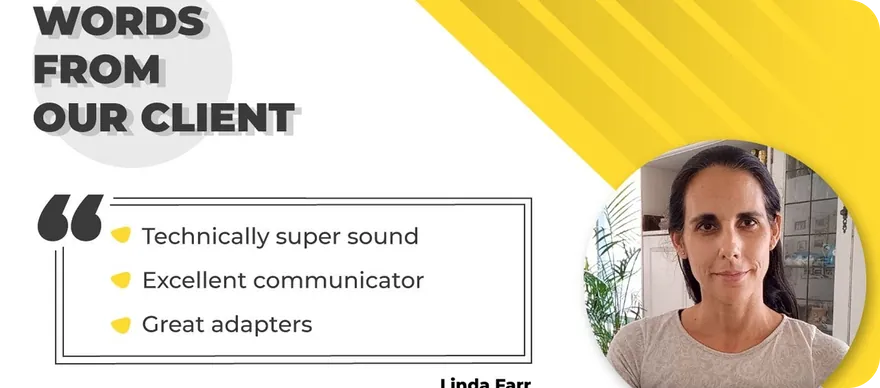
Uplers' talents consistently deliver high-quality work along with unmatched reliability, work ethic, and dedication to the job.

Linda Farr
Chief of Staff

Case Studies of Tech Companies

Check Our Latest Blogs

Key Capabilities of Java Developers: What to Look for When You Hire

From banking backends to Android infrastructure, Java runs more of the world's software than most people realize. It's one of the few languages that scales comfortably from a two-person startup to a Fortune 500 engineering organization. That is why it's still a default choice for product companies building serious backend systems.

But the language is only as good as the engineer using it. Here's what capable Java developers bring to the table and what to look for when you hire.

What Separates a Good Java Developer from a Great One

What you're really evaluating is whether someone understands systems. The capabilities below are what that looks like in practice.

Enterprise Application Development

Java's enterprise track record is unmatched. Financial systems, ERP platforms, and healthcare data pipelines run on Java because it handles large user bases and high-throughput data.

The developers worth hiring have real depth in Jakarta EE for multi-tiered architecture, Spring Boot and Spring Cloud for application structure, and Spring Security paired with OAuth2 and JWT for access control. They're comfortable building REST and gRPC services, setting up message-driven systems with Kafka or RabbitMQ, and managing builds with Maven or Gradle. Containerized deployment with Docker and Kubernetes shouldn't be new territory for them.

This helps you get systems that scale without requiring a full rewrite every time you hit a new growth threshold.

Microservices Architecture

Monoliths are easy to start with and painful to scale. Java developers who understand microservices can decompose a system into independent, deployable services, each testable, scalable, and replaceable without affecting the others.

Look for hands-on experience with Spring Boot and Spring Cloud for microservice scaffolding, Spring Cloud Gateway or Kong for API management, and Eureka or Consul for service discovery. Beyond the setup, test whether they understand event sourcing and CQRS for transactional decoupling, and whether they've actually implemented circuit breakers and health checks in a live system.

For a startup moving fast, this matters more than most things. Modular systems mean isolated failures and the ability to scale one service without touching another.

API Integration

Most product companies aren't building in isolation. Payment processors, analytics platforms, identity providers, and data feeds need to talk to each other reliably, and that's where much of the quietly bad engineering happens.

Strong Java developers handle this through solid RESTful and GraphQL API design, Spring WebFlux for non-blocking reactive handling, and secure token-based authentication across services. They know how to build clean third-party integrations and can write custom API wrappers when an SDK doesn't do exactly what you need.

Security and Compliance

Security in Java is built into the language's handling of cryptography, access control, and input validation. It requires engineers who know what they're doing.

The fundamentals to look for include Java Cryptography Architecture for encryption and hashing, Spring Security with JWT and OAuth2 for access control, proper input validation against XSS and SQL injection, and dependency auditing through OWASP tools. Audit logging for compliance traceability and controlled exception handling round out what a security-conscious Java developer should bring by default.

For startups handling user data, this isn't optional. One unpatched dependency or a missing validation layer is all it takes.

Custom Application Development

Off-the-shelf tools have limits. When your product has logic that doesn't fit a template, you need developers who can build for your specific domain.

This is where domain-driven design matters. Good Java developers use DDD to model complex business logic cleanly rather than forcing it into generic patterns that break down under real-world conditions. They're comfortable with multithreading and concurrency for parallel processing, workflow engines like Camunda or Activiti for process-heavy applications, and performance profiling tools like VisualVM or JProfiler for diagnosing performance issues.

Mobile (Android) Backend and Infrastructure

Java underpins Android at the platform level. Startups building Android apps need developers with a strong Java background who deeply understand the runtime. This includes how memory is managed, how threads behave, and how the ART VM differs from a standard JVM.

Kotlin is Google's default for new Android development. Most strong Java developers are comfortable in both. If you're hiring for Android, JVM knowledge matters more than the language they use day to day.

What to Prioritize for a Startup

The enterprise Java skill set is broad. At an early stage, you don't need someone who's done all of it. You need someone who's done the right parts.

Spring Boot 4.x is the current generation, built on Spring Framework 7 with a Java 17 minimum. Any developer you're hiring for new work should be comfortable here. On the language side, Java 25 is the active LTS, virtual threads are stable, structured concurrency is production-ready, and pattern matching has matured significantly. A candidate still defaulting to Java 11 patterns for new projects needs a convincing reason.

Apart from version numbers, look for microservices experience with real production exposure, security fundamentals baked into how they code rather than added at the end, and the ability to operate without heavy process overhead. Your team is small. Deep specialization is a luxury you can afford later.

How to Hire the Right Java Developer for Your Startup

Most founders don't struggle to find Java developers. They struggle to find one who actually fits a startup. Someone who is comfortable making architecture calls independently and shipping without a six-person review process.

Here's how to hire that person.

A Practical Hiring Framework for Founders

You don't need a perfect hiring process. You need one that surfaces the right signals early and saves you from expensive mistakes. These steps will do that.

Define the Role

Start with what you need to build. Don’t rely on a job description template.

Answer a few key questions- Are you building a backend API from scratch? Migrating a monolith into microservices? Integrating third-party services at scale? The answer changes who you're looking for.

Be specific about your stack, like Spring Boot version, cloud provider, and database layer, and be honest about seniority. A principal engineer and a solid mid-level developer are different hires at very different price points. Know which one you need right now.

Run a Technical Assessment

Java resumes are not enough. Assign a short take-home or live-coding task that resembles their actual work.

Evaluate fundamentals, concurrency handling, and code readability. If your stack uses Spring Boot 4.x and microservices, test specifically for that. Ask them to review a piece of existing code and tell you what they'd change. How someone reads code is as telling as how they write it.

Check their Past Projects

Ask for production systems they've owned. Review the code if they can share it. Talk to a previous tech lead if possible.

What you want to know is how they made architectural decisions and what tradeoffs they accepted. Developers who can't explain why they built something a certain way usually weren't the ones driving it.

Assess How They Handle Ambiguity

Startups often begin projects without finalizing requirements. Your Java developer will need to make independent decisions regarding architecture, technical debt, refactoring, and delivery timelines.

Ask how they've approached building something when the requirements weren't fully defined. Strong candidates have a process and can walk you through it. Weak ones wait to be told what to do, then blame the spec when it goes wrong.

Evaluate Working Style and Setup

For remote hires, ask about their work setup, internet reliability, daily overlap hours with your team, and asynchronous communication practices. Developers without experience in distributed teams may face coordination challenges.

Also, ask how they stay updated. Java 25 is the active LTS, and Spring Boot 4.x is the current generation. Anyone defaulting to older versions for new projects needs a good reason.

Check for Culture Fit

Culture fit at a startup isn't about personality; it's about how someone operates under pressure and uncertainty. Do they ask sharp questions? Do they push back when something doesn't add up?

Watch how they engage during the interview itself. Are they thinking about your problem, or are they just answering questions? That's your preview.

Questions to Ask When Interviewing a Java Developer

You've defined the role and run the assessment. Now it’s time for the interview. These questions are designed to help you quickly separate candidates who truly understand Java from those who've memorized the right answers.

As you interview candidates, make sure they are up to date with Java 25, the current LTS released in September 2025. Java 21 is still widely used in production as the previous LTS, so familiarity with both is reasonable. But anyone building new systems should be targeting Java 25. Key features to assess are structured concurrency (now stable), value objects, and string templates.

For senior hires, look for hands-on experience with Spring Boot 4.x, comfort with containerized environments, and real-world microservices exposure.

Questions to Ask: What to Listen For

Each question will surface a specific signal. How someone thinks under pressure, whether they understand systems or just syntax, and whether they'll own problems or deflect them.

Technical Questions

1. How does Java enable high performance?

The expected answer is Java's Just-in-Time (JIT) compiler converts bytecode into native machine code at runtime. That's where the performance comes from.

But a strong candidate goes further. They'll mention garbage collection tuning, heap profiling with tools like VisualVM, and how the JVM behaves in containerized environments. If they can only explain JIT but can't tune it, that's a mid-level signal.

2. Explain OOP concepts.

A beginner would cover the four principles, which are encapsulation, inheritance, polymorphism, and abstraction, with examples.

A senior and experienced engineer will explain how they've used these in practice. How does encapsulation structure domain models in Spring? How have they used inheritance in service abstraction within a microservices setup? The answer will connect OOP to real architecture decisions rather than just definitions.

3. What are the differences between an interface and an abstract class?

The basic answer covers the structural differences. For example, interfaces define contracts, and abstract classes provide partial implementations.

What separates a strong senior candidate is that they know that, since Java 8, interfaces can contain default and private methods, which blurs the traditional distinction. A great answer explains when they'd choose one over the other based on architecture. If they default to "the interface is slower," they're reciting something from 2012.

4. Can you explain Method Overriding in Java?

The common definition is- method overriding lets a subclass replace a superclass method. It's the mechanism behind runtime polymorphism.

For senior candidates, push further. How have they used overriding in Spring Boot? Ask about overriding lifecycle methods and extending a base REST controller. Ask for a concrete example from their last project. Definitions are easy, but real-life application is the true signal.

5. How would you tune Hibernate's session factory settings in a highly concurrent Java application?

This one separates developers who've actually dealt with performance at scale from those who haven't.

Listen for connection pool sizing via HikariCP, second-level caching configuration, fetch strategy tuning, and statement batching. Strong candidates will mention keeping sessions short-lived and using stateless sessions where appropriate. Long sessions in high-concurrency environments are a common source of bottlenecks.

Ask about transaction isolation levels and how JVM memory settings interact with Hibernate under load. If they can only describe what Hibernate does but not how to tune it, that's a mid-level signal.

6. How would you reduce memory leaks in a long-running Java Spring Boot application?

Production-grade Spring Boot apps run for months without restarts. Memory leaks that don't show up in testing will show up eventually in production, often at the worst time.

A strong answer starts with tools. For example, heap dump analysis using VisualVM or Eclipse MAT to identify objects being retained longer than they should be. From there, they should walk through the usual suspects, like static references to large objects, unclosed streams and database connections, thread-local variables not being cleaned up, and singleton beans in Spring accidentally holding state.

If they directly talk about "restart the service" or "increase heap size," that's a gap. The fix and the prevention are two different things, and a good candidate knows both.

Cloud & System Design Questions

7. How would you architect a Java-based microservices system to be scalable and maintainable?

A good answer will include service boundaries defined by domain (not team convenience), independent deployability, and a clear approach to inter-service communication: REST, gRPC, or event-driven.

Also, look for candidates who mention containerization, an orchestration layer (Kubernetes or managed equivalent), service discovery, centralized logging, and circuit breakers for fault tolerance. They should also cover database-per-service and how they handle eventual consistency.

Watch out for the distributed monolith- services that share a database or deploy together. If they describe that setup without flagging it as a problem.

8. How do you monitor and maintain the performance of a Java application under high traffic?

A practical answer covers three layers: infrastructure metrics (CPU, memory, request latency), application-level health (Spring Boot Actuator, thread dumps), and distributed tracing to pinpoint bottlenecks across services (Zipkin, Jaeger, or a cloud-native equivalent).

For load testing, they should mention JMeter or Gatling. For scaling, look for horizontal strategies over vertical ones.

A strong candidate will talk about runbooks and alert thresholds. Anyone can list tools. Fewer people have actually fixed a live issue.

Exploratory Questions

9. What's the best Java project you've worked on? Walk me through it.

This is one of the most useful questions you can ask. The candidate picks their best work, so they're motivated to go deep, and you get a real window into their technical judgment.

Try to understand how they made architecture decisions, what tradeoffs they faced, and what they might do differently next time. If a candidate only talks about features they built without mentioning how they solved problems, they may lack strong systems thinking.

10. Tell me about a production incident you owned. What happened, and how did you resolve it?

Production incidents reveal more about a developer than any whiteboard question. You learn how they communicate under pressure, whether they reach for the right debugging tools, and if they can take ownership.

A strong answer covers how they diagnosed the issue (logs, metrics, thread dumps), what they changed, and what they fixed to prevent recurrence.

11. Do you have experience outside Java that's shaped how you work?

Developers who've worked across languages such as Python, Go, Kotlin, and Scala tend to make better architectural decisions in Java. If someone has worked only with Java, it's not a dealbreaker. But assess whether they can articulate why they make specific choices, or whether they just default to what they know.

12. When working in a team, what role do you typically take on?

This tells you about self-awareness as much as team dynamics. Strong engineers know exactly where they add the most value and where they don't.

For a lead role, ask: How do they handle code reviews? Have they contributed to CI/CD pipeline decisions? How do they collaborate in Git? These habits reveal how they'll integrate into your team.

Frequently Asked Questions

Uplers ensures a seamless hiring experience by combining AI and human intelligence to vet top-quality Java developers. You receive carefully shortlisted profiles within 48 hours and can onboard the right talent in as little as 2 weeks, helping you hire faster without compromising on quality.

You can receive the top 1% shortlisted profiles within 48 hours through Uplers. Once you finalize the most suitable Java developer, Uplers handles the entire hiring and onboarding process. Depending on your requirements and decision-making timeline, onboarding typically takes 2-4 weeks.

If the developer doesn’t meet your expectations, we offer a 90-day replacement guarantee for full-time hires and a lifetime replacement for contract roles, at no additional cost. Additionally, you can opt for a 30-day cancellation policy with no extra charges, giving you complete flexibility to make changes as needed.

The average cost of hiring a Java Developer from Uplers starts at $2500. The number varies depending on the experience level of the developer as well as your requirements.

View Our Pricing For 2025 - 26

Yes. Java developers in the Uplers network are evaluated for English proficiency and overall suitability for work environments. Beyond language skills, cultural alignment is also assessed to help ensure smooth integration with your team, enabling productive interactions and long-term success.

Java developers in the network are experienced across modern Java frameworks and backend ecosystems, including Spring Boot, Spring MVC, Hibernate, JPA, and Java EE for enterprise application development. Many also work with cloud-native and high-performance technologies such as Quarkus, Micronaut, GraalVM, and reactive programming frameworks for scalable microservices and containerized applications. Their expertise extends to modern Java LTS versions, concurrent programming, API development, cloud integrations, and performance-focused backend architecture.

Yes. Java developers in the network have experience building and maintaining large-scale enterprise applications across industries such as fintech, healthcare, logistics, and Startup. Their expertise includes payment systems, compliance-focused platforms, multi-tenant architectures, high-volume transaction processing, API platforms, real-time systems, and scalable backend infrastructures using modern Java and Spring-based ecosystems.

Yes. Many Java developers in the network are experienced with cloud-native application deployment across AWS, Azure, and GCP environments. Their expertise includes Docker containerization, Kubernetes orchestration, serverless Java runtimes, cloud-managed services, CI/CD workflows, and scalable deployment architectures for enterprise-grade Java applications.

Yes. The network includes Java developers who are also proficient in Kotlin for modern backend and Android development workflows. Many also have full-stack experience, working with Java and Spring Boot on the backend alongside frontend technologies such as React, Angular, or Vue.js to build scalable end-to-end web applications.

Yes. You can review shortlisted profiles and conduct your own interviews, technical assessments, coding challenges, or test tasks before making a final hiring decision. This helps ensure the developer aligns with your technical requirements, working style, and project expectations before onboarding.

Java developers in the network are experienced in working within Agile and Scrum environments, including sprint planning, daily standups, retrospectives, code reviews, and architectural discussions. Many are also familiar with collaborative development workflows, pull request reviews, CI/CD practices, and distributed team collaboration across modern engineering environments.

Yes. The network supports flexible team scaling based on evolving product and engineering needs. Alongside Java developers, businesses can also add senior architects, QA engineers, DevOps specialists, and other supporting roles as projects expand. This enables teams to scale development capacity, system architecture, testing, and deployment capabilities without managing multiple hiring pipelines.

Yes. Many Java developers in the network have hands-on experience designing, deploying, and maintaining production-grade microservices using technologies such as Spring Boot, Quarkus, Docker, and Kubernetes. Their expertise includes containerization, service orchestration, API communication, message queues, cloud-native deployment strategies, scaling, monitoring, and distributed system architecture for enterprise applications.

Java developers in the network are experienced with SQL databases such as MySQL, PostgreSQL, and Oracle, along with NoSQL systems including MongoDB, Cassandra, and DynamoDB. Their expertise also includes ORM frameworks like Hibernate and Spring Data JPA, database migration tools such as Flyway and Liquibase, and caching technologies including Redis and Hazelcast for distributed caching, session management, and high-performance application architecture.

Many Java developers in the network are experienced with modern CI/CD workflows, automated deployment pipelines, and infrastructure-as-code practices. Their expertise includes build tools such as Maven and Gradle, CI/CD platforms like GitHub Actions, GitLab CI/CD, and Jenkins, along with Docker, Kubernetes, Helm, Terraform, and cloud deployment automation for scalable Java application delivery.

Yes. Many Java developers in the network have experience integrating AI/ML and GenAI capabilities into enterprise applications and backend systems. Their expertise includes working with LLM APIs, AI orchestration frameworks, RAG workflows, REST-based AI integrations, and modern Java AI ecosystems such as Spring AI and LangChain4j for building intelligent, AI-powered application features and services.

Java developers in the network follow enterprise-grade best practices for building secure, scalable, and high-performance applications. Their expertise includes secure authentication and authorization workflows, OWASP-aligned security practices, microservices architecture, event-driven systems, Kubernetes-based scaling, database optimization, JVM performance tuning, concurrent processing, and modern Java performance enhancements for handling large-scale enterprise workloads efficiently.